
The Rising Challenge of Heat Stress in the United States
High temperatures are no longer seasonal exceptions across the United States. In states like Texas, Arizona, Nevada, and California, summer temperatures often exceed 100°F (38°C). Outdoor workers face direct sun exposure for long hours, which increases the risk of dehydration, fatigue, and heat-related illness.
Construction crews, utility workers, warehouse teams, agricultural laborers, and logistics staff must maintain productivity despite extreme heat. When body temperature rises, concentration drops. Reaction time slows. Mistakes increase.
Employers cannot afford these risks.
This reality has pushed many companies to adopt cooling apparel as a practical solution to improve both safety and performance.
Why Cooling Apparel Directly Impacts Productivity
Cooling apparel does more than provide comfort. It stabilizes body temperature and reduces physiological strain.
When workers feel cooler:
- They sustain physical output longer
- They experience fewer fatigue-related slowdowns
- They take fewer unscheduled breaks
- They maintain higher focus levels
Even a small improvement in thermal comfort can translate into measurable productivity gains across large teams.
For example, on large-scale infrastructure projects, reduced heat stress helps supervisors maintain consistent workflow schedules. In agriculture, workers can complete harvesting cycles more efficiently. In delivery and logistics, drivers maintain alertness during long shifts.
Cooling garments create a direct link between worker well-being and operational efficiency.
Key Cooling Technologies Used in the U.S. Market
Different industries require different cooling mechanisms. U.S. buyers typically evaluate apparel based on performance, durability, and compliance with workplace standards.
1. Evaporative Cooling Systems
These garments absorb water and activate cooling through evaporation. Workers soak the vest briefly before use. The fabric then delivers cooling for several hours.
Advantages:
- Lightweight
- Reusable
- No battery required
- Cost-effective for large teams
2. Phase Change Material (PCM) Inserts
PCM vests contain cooling packs that maintain a stable temperature for a defined duration. Workers recharge the packs during breaks.
Advantages:
- Consistent cooling temperature
- Reliable for structured work cycles
- Ideal for construction and utilities
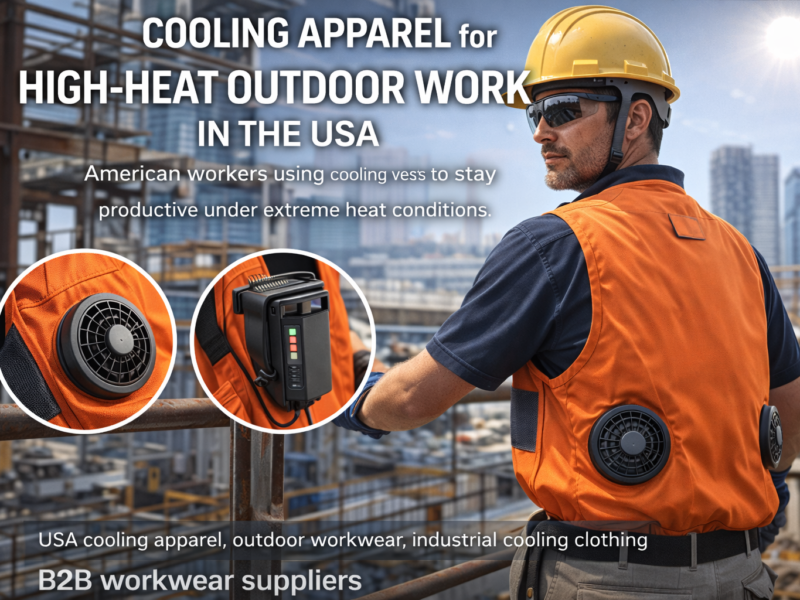
3. Fan-Assisted Cooling Jackets
These garments integrate small fans to circulate air inside the clothing system.
Advantages:
- Continuous airflow
- Strong cooling effect
- Popular in warehousing and manufacturing
Each solution serves a specific operational need. Buyers often select products based on work intensity, humidity levels, and shift duration.
Compliance and Safety Expectations in the U.S.
U.S. employers prioritize worker safety regulations and liability control. While OSHA does not mandate specific cooling apparel, it requires employers to mitigate heat hazards under the General Duty Clause.
This regulatory pressure increases demand for:
- Durable fabrics
- Flame-resistant options for industrial sectors
- High-visibility designs for construction
- Ergonomic fits that do not restrict movement
OEM manufacturers must understand these expectations before entering the U.S. market.
What U.S. B2B Buyers Look for in OEM Partners
Beyond product performance, American distributors and corporate buyers evaluate suppliers based on reliability and scalability.
They expect:
- Stable production capacity
- Consistent quality control
- Custom branding options
- Fast sampling turnaround
- Transparent communication
Price remains important, but buyers prioritize long-term stability over short-term savings.
Suppliers that demonstrate technical understanding of heat management and workplace requirements gain stronger negotiation leverage.
Long-Term ROI for Employers
Cooling apparel represents an investment, not just a safety accessory.
Companies that deploy structured heat management programs often report:
- Reduced absenteeism
- Lower heat-related incident rates
- Improved worker morale
- Higher task completion rates
When employers quantify these benefits, cooling apparel becomes part of productivity strategy rather than seasonal spending.
High-heat outdoor work environments in the United States demand proactive solutions. Cooling apparel provides a practical way to protect workers while improving operational efficiency.
For OEM manufacturers, understanding industry needs, regulatory context, and performance expectations remains essential. Suppliers that align product design with real-world job conditions can build long-term partnerships in the U.S. market.
Recent Comments