
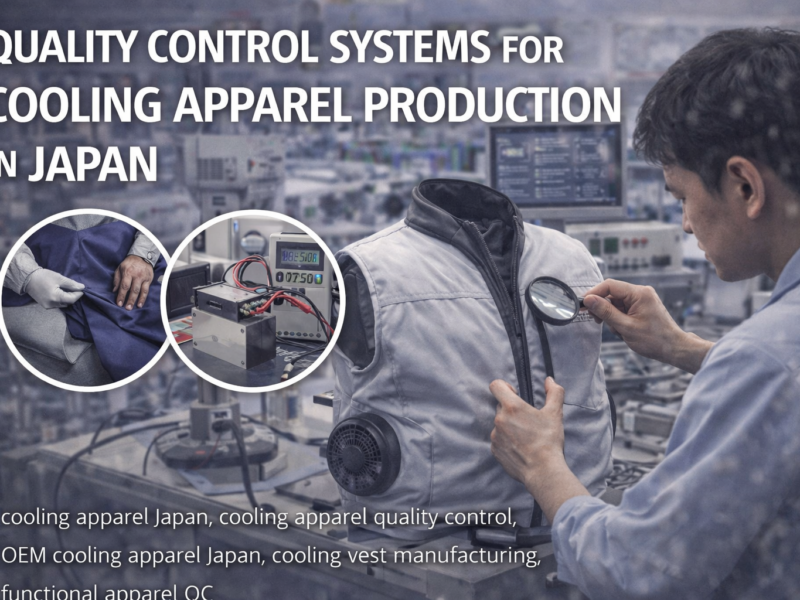
Why Quality Control Is Critical in Japan’s Market
Japanese buyers maintain extremely high expectations for product consistency. They do not only evaluate sample quality. Instead, they focus on whether every production batch delivers the same performance.
Because of this, quality control becomes a decisive factor in supplier selection. Buyers expect manufacturers to demonstrate structured systems rather than informal inspection processes.
Moreover, consistent quality directly affects long-term partnerships. Suppliers who fail to maintain standards often lose repeat orders.
Key Quality Control Stages in Cooling Apparel Production
Cooling apparel production involves multiple inspection stages. Each stage ensures that the final product meets performance and durability expectations.
Raw Material Inspection
Manufacturers inspect fabrics before production begins. They verify:
- Breathability performance
- Fabric strength
- Color consistency
Because material variation can affect airflow and comfort, early-stage inspection prevents downstream defects.
In-Line Production Inspection
Factories monitor production processes continuously. Workers and quality teams check:
- Stitching accuracy
- Fan installation alignment
- Electrical wiring stability
If defects appear during assembly, teams correct them immediately. As a result, factories reduce the risk of large-scale production issues.
Final Product Testing
Before shipment, manufacturers test finished garments to confirm functionality.
Testing includes:
- Fan airflow performance
- Battery connection stability
- Overall garment durability
These tests ensure that each product meets defined performance standards.
Why Consistency Matters More Than Speed
Some manufacturers prioritize rapid production. However, Japanese buyers value consistency over speed.
Even small differences between batches may lead to rejection or reduced trust. Therefore, factories must maintain stable processes across every production cycle.
Standardized procedures, trained technicians, and documented inspection systems all contribute to consistent output.
The Role of Traceability in OEM Production
Traceability is an important requirement in Japan’s B2B market. Buyers often request detailed records that track materials, production processes, and testing results.
Manufacturers who maintain traceable systems can quickly identify and resolve issues. This transparency strengthens buyer confidence and supports long-term cooperation.
Cooling apparel Japan production requires more than functional design.
It depends on structured quality control systems that ensure consistency across every batch.
OEM suppliers who implement strict inspection processes, maintain traceability, and prioritize stability over speed can build strong relationships with Japanese buyers.
Recent Comments