
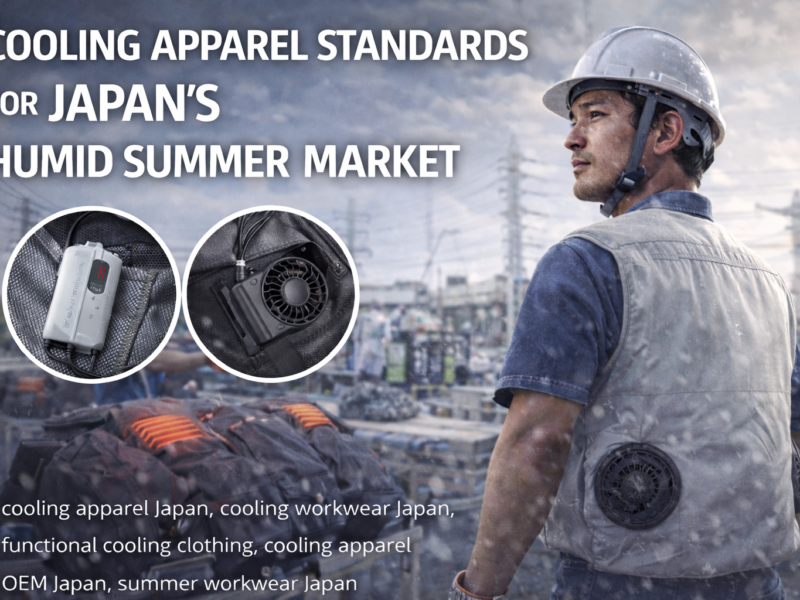
Why Japan’s Climate Requires Specialized Cooling Apparel
Japan’s summer climate creates unique challenges for outdoor and industrial workers. High humidity levels combine with elevated temperatures, making heat stress a significant concern across multiple industries.
Construction teams, logistics operators, factory technicians, and infrastructure workers often perform physically demanding tasks in environments where airflow remains limited. As a result, body heat accumulates quickly and reduces worker endurance.
Traditional lightweight clothing cannot effectively manage these conditions. Therefore, companies increasingly adopt cooling apparel systems that improve airflow and regulate body temperature.
Key Environmental Factors Affecting Cooling Workwear in Japan
Japan’s climate differs from dry heat environments. Instead of extreme temperature alone, humidity plays a major role in worker discomfort.
High moisture levels prevent sweat from evaporating efficiently. Consequently, workers feel hotter even when temperatures appear moderate.
Cooling apparel designed for the Japanese market must therefore address both heat and humidity simultaneously. Manufacturers must focus on breathable fabrics, ventilation systems, and lightweight garment structures.
Performance Standards Japanese Buyers Expect
Japanese corporate buyers typically evaluate cooling apparel using several technical criteria.
Fabric Breathability
High-performance fabrics must allow moisture to escape quickly while maintaining durability. Many buyers request measurable air permeability data before approving bulk orders.
Ventilation and Airflow Systems
Fan-assisted cooling jackets have become increasingly common in Japan. These garments circulate air through the clothing system, helping workers maintain a stable body temperature.
Manufacturers must ensure that airflow remains consistent across long working hours.
Lightweight Structural Design
Workers in Japan often move continuously during their shifts. As a result, cooling garments must remain lightweight while still providing durability and functional performance.
OEM suppliers therefore prioritize ergonomic pattern design and flexible fabric structures.
Why Precision Manufacturing Matters in Japan
Japanese buyers maintain strict expectations regarding product consistency. Even small differences between production batches may raise concerns during quality inspections.
Because of this, OEM factories must maintain stable production processes. Precise stitching, accurate heating or fan placement, and consistent material sourcing all contribute to long-term partnerships.
Manufacturers who demonstrate reliable quality control gain stronger trust from Japanese distributors and corporate buyers.
Cooling apparel Japan demand continues to grow as companies search for effective solutions to manage summer heat and humidity.
Manufacturers who understand the environmental challenges and maintain high production standards can successfully support Japan’s industrial and corporate workwear markets.
OEM suppliers that combine breathable materials, efficient ventilation systems, and precise manufacturing processes will remain competitive in this rapidly expanding segment.
Recent Comments