
Why Damp Cold Creates Greater Operational Risk
In the UK, winter rarely brings extreme snowstorms. Instead, persistent damp air and wind create a deeper chilling effect. As a result, workers lose body heat faster than expected.
Damp air penetrates traditional insulation layers more easily. Consequently, workers experience discomfort even at moderate temperatures. Moreover, prolonged exposure to wet conditions increases fatigue and reduces output on-site.
Therefore, many companies now integrate heated apparel into their winter PPE strategy rather than treating it as optional gear.
Industries That Drive Heated Apparel Demand
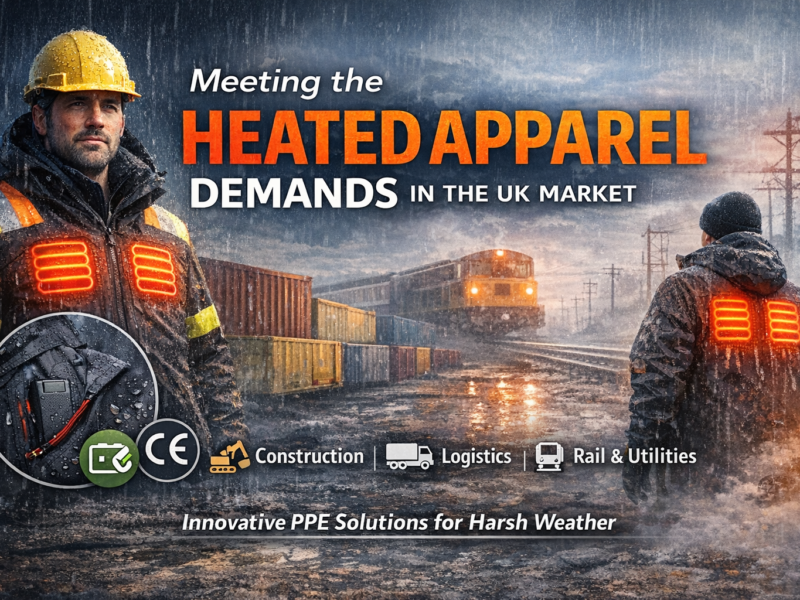
Construction companies lead the demand for heated apparel in the UK. Outdoor teams operate in rain, wind, and fluctuating temperatures for long shifts. Therefore, site managers prioritize consistent body warmth to maintain productivity.
Logistics operators also invest in heated garments. Workers frequently move between loading docks and outdoor yards, which exposes them to damp air throughout the day. As a result, temperature regulation becomes critical.
In addition, railway maintenance crews, utility workers, and port operators rely on heated apparel during extended outdoor operations. Because these sectors operate year-round, they require reliable thermal solutions rather than seasonal clothing upgrades.
What UK Buyers Expect from Heated Apparel OEM Suppliers
UK B2B buyers evaluate more than basic heating performance. Instead, they assess structural design, safety compliance, and long-term durability.
Moisture-Resistant Design
OEM manufacturers must design garments that resist moisture penetration. Engineers need to seal wiring channels and protect heating panels against damp exposure. Otherwise, the garment loses efficiency over time.
Suppliers should also integrate:
- Water-resistant outer fabrics
- Reinforced seam construction
- Protected battery compartments
These features reduce failure risk in wet working environments.
Even Heat Distribution
Design teams must map heating zones carefully. Concentrating heat in one area creates discomfort and lowers user satisfaction.
Therefore, many manufacturers now distribute heating elements across:
- Upper back
- Core chest area
- Lower back
This configuration improves comfort and increases perceived product value.
Battery Stability and Compliance Readiness
Buyers expect stable battery performance across long shifts. OEM suppliers must provide documented cycle testing and safety data.
Procurement managers also review:
- Battery certification files
- CE-related documentation
- Transport safety compliance
Clear documentation accelerates approval and reduces purchasing delays.
Why OEM Expertise Matters in the UK Climate
The UK climate requires balance. Designers must combine insulation, breathability, and active heating without adding unnecessary bulk.
If manufacturers add too much insulation, moisture accumulates inside the garment. However, if they reduce insulation too aggressively, heating efficiency drops.
Experienced OEM partners test fabric weight, heating density, and ergonomic fit simultaneously. In addition, they offer flexible MOQ options and private labeling support to meet distributor needs.
UK companies face damp winter conditions every year. Therefore, they prioritize heated apparel that supports daily operations rather than extreme weather emergencies.
OEM suppliers that understand moisture resistance, compliance requirements, and industrial usage scenarios will strengthen their position in the UK B2B market.
Recent Comments