
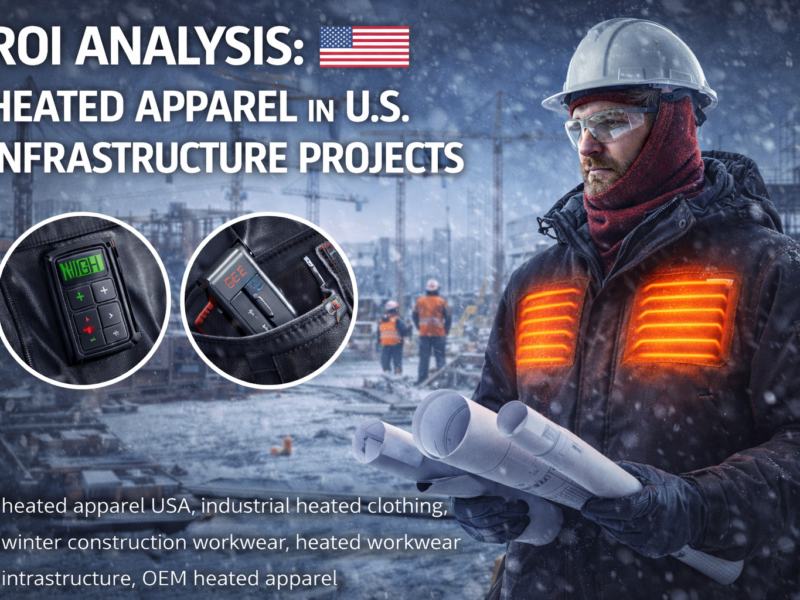
Why Winter Infrastructure Projects Face Productivity Challenges
Infrastructure projects across the United States continue throughout winter months. Construction crews, utility workers, and maintenance teams must perform tasks in cold outdoor environments where temperatures often fall below safe comfort levels.
Cold weather directly impacts worker performance. As temperatures drop, muscle flexibility decreases and manual precision becomes harder to maintain. Consequently, employees require more time to complete tasks.
Moreover, frequent warming breaks interrupt workflow and reduce overall productivity. Project managers must therefore balance worker safety with operational efficiency.
Because of these challenges, many companies now integrate heated apparel into winter infrastructure operations.
Understanding the Operational Cost of Cold Weather
Cold conditions increase several hidden costs during infrastructure projects.
First, worker productivity declines when employees struggle to maintain body warmth. Even a small decrease in efficiency can slow project timelines significantly.
Second, fatigue increases when the body constantly tries to regulate temperature. As a result, workers experience higher exhaustion levels during long shifts.
Third, safety risks rise when cold environments reduce concentration and dexterity. Minor mistakes can lead to equipment damage or workplace injuries.
For these reasons, companies are increasingly evaluating heated apparel as a cost-control solution rather than a simple comfort upgrade.
How Heated Apparel Improves Workforce Efficiency
Heated apparel stabilizes core body temperature during cold-weather operations. This improvement allows workers to maintain consistent physical performance throughout the workday.
Instead of wearing multiple heavy layers, employees can rely on lightweight heated garments that deliver targeted warmth. Consequently, mobility improves while fatigue decreases.
Furthermore, heated workwear helps reduce the frequency of warming breaks. Crews remain active for longer periods without sacrificing safety or comfort.
These factors contribute directly to improved operational efficiency.
Evaluating the Return on Investment
When companies evaluate heated apparel programs, they typically consider several measurable benefits.
Increased Productivity
Workers who remain comfortable in cold environments maintain steady task performance throughout their shifts.
Reduced Project Delays
Fewer interruptions allow teams to follow scheduled timelines more closely.
Improved Worker Retention
Comfortable working conditions help reduce employee turnover in physically demanding industries.
Lower Safety Risks
Stable body temperature improves concentration and reduces accident potential.
Together, these factors produce a clear operational return on investment.
Why OEM Manufacturing Supports Large Infrastructure Programs
Infrastructure contractors often require large quantities of winter workwear across multiple project sites. OEM partnerships allow companies to secure consistent product supply and customization options.
Manufacturers can adjust heating zones, battery capacity, and fabric durability based on project requirements. In addition, OEM suppliers support private labeling for contractors and equipment providers.
Because infrastructure programs often span multiple years, stable OEM partnerships provide long-term supply reliability.
Winter infrastructure projects across the United States require solutions that maintain productivity without compromising worker safety.
Heated apparel USA programs offer a practical way to improve operational efficiency while protecting employees from harsh conditions.
Organizations that integrate heated workwear into their winter planning strategies can reduce project disruptions and support more consistent workforce performance.
Recent Comments