
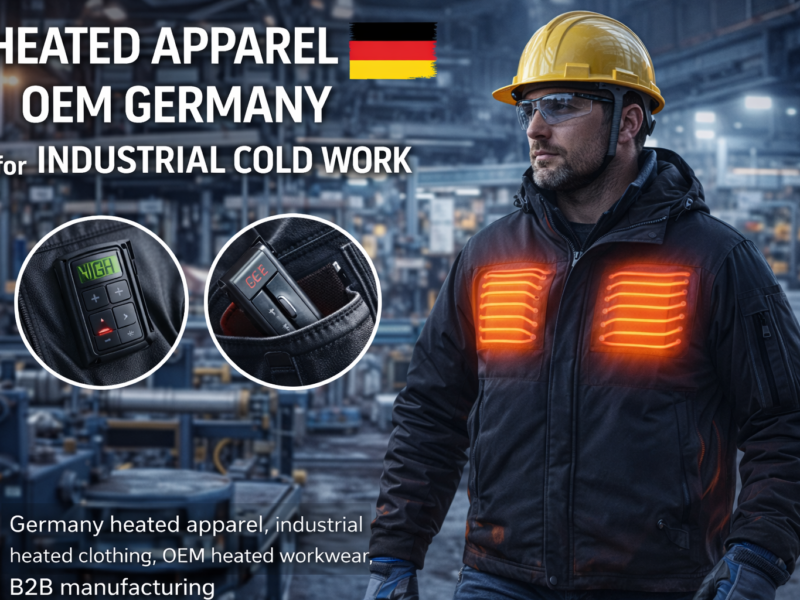
Why Industrial Cold Conditions Require Precision Heating
Germany’s industrial sector operates year-round. However, many facilities expose workers to low temperatures, especially in logistics hubs, automotive plants, food processing, and metal fabrication.
Cold environments reduce dexterity and slow reaction time. As a result, productivity drops when workers struggle to maintain stable body warmth. Moreover, repetitive cold exposure increases fatigue during long shifts.
Therefore, companies increasingly integrate heated apparel into structured workplace safety strategies rather than treating it as seasonal gear.
Industrial Sectors Driving Demand in Germany
German manufacturers prioritize consistency and performance. Consequently, heated apparel must align with strict operational standards.
Automotive and Mechanical Manufacturing
Workers often move between heated production zones and colder loading areas. Therefore, garments must provide adjustable heating rather than constant maximum output.
Cold Storage and Food Processing
These facilities maintain controlled low temperatures throughout the day. As a result, workers require stable heating zones that do not restrict movement or compromise hygiene protocols.
Logistics and Distribution Centers
Loading docks expose staff to cold air during winter months. In addition, long shifts demand extended battery runtime and reliable insulation.
What German Buyers Expect from OEM Manufacturers
German B2B buyers evaluate technical reliability before price. Therefore, OEM partners must demonstrate structured quality control and documented testing procedures.
1. Controlled Heat Distribution
Engineers must design multi-zone heating panels that maintain stable warmth without overheating. Uneven heating reduces perceived product quality.
2. Durable Construction Standards
Industrial environments expose garments to abrasion, mechanical contact, and frequent washing. Consequently, suppliers must select reinforced fabrics and robust wiring systems.
3. Safety and Compliance Documentation
German buyers often request detailed technical files. In addition, they review material safety reports and battery certification documentation.
Clear documentation accelerates procurement decisions.
Why Long-Term OEM Stability Matters
Germany values predictable supply chains. Buyers expect:
- Stable production capacity
- Transparent communication
- Consistent quality control
- Scalable manufacturing planning
Because industrial contracts often extend over multiple seasons, suppliers must maintain stable component sourcing and battery performance standards.
Industrial cold work in Germany requires structured heating solutions rather than basic thermal insulation.
Heated apparel OEM Germany suppliers who combine durability, compliance readiness, and production stability will strengthen their position in the European B2B market.
Recent Comments