
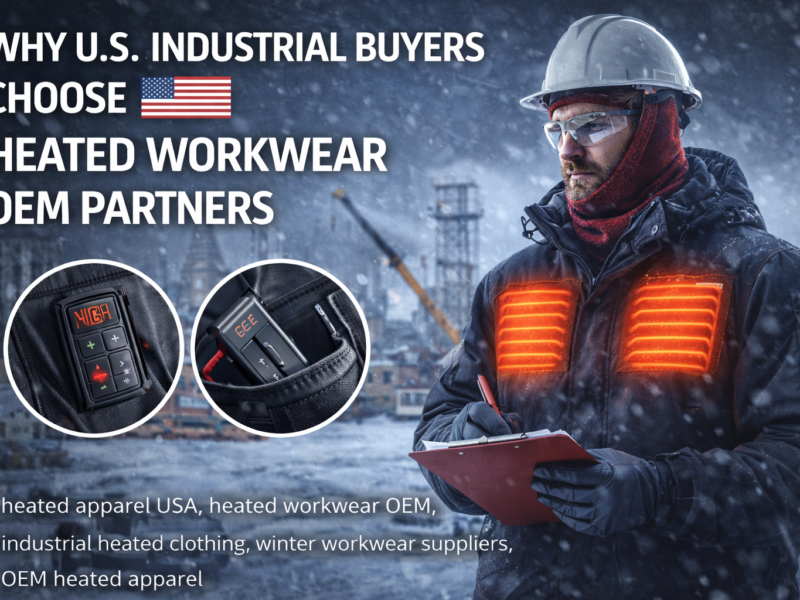
Why Industrial Work Environments Demand Reliable Heated Apparel
Industrial workplaces across the United States face challenging winter conditions. Workers often perform tasks in warehouses, logistics yards, construction sites, and outdoor maintenance zones where temperatures drop significantly.
As a result, companies must protect employees from prolonged cold exposure. Traditional insulated clothing slows heat loss; however, it does not actively maintain body warmth. Therefore, many organizations invest in heated apparel to support consistent worker performance.
Moreover, heated garments help maintain comfort without adding excessive layers. This balance improves mobility and allows workers to complete physically demanding tasks more efficiently.
Why U.S. Companies Prefer OEM Partnerships
American industrial buyers frequently choose OEM suppliers instead of purchasing generic off-the-shelf products. Several factors influence this decision.
Customization for Specific Work Environments
Each industry operates under different conditions. For example, warehouse teams require lightweight heated jackets that allow lifting and bending, while infrastructure workers often need heavier protection.
OEM manufacturing allows companies to adjust heating zones, fabric durability, and battery capacity based on specific operational needs.
Private Label and Brand Consistency
Many U.S. distributors and workwear brands prioritize private labeling. By partnering with OEM manufacturers, they can develop exclusive product lines while maintaining consistent branding.
This strategy strengthens brand recognition and creates long-term differentiation in competitive markets.
Supply Chain Stability
Industrial buyers often place recurring seasonal orders. Therefore, they prefer suppliers who can maintain stable production capacity and predictable delivery schedules.
OEM partners provide structured manufacturing planning, quality control systems, and consistent material sourcing. As a result, buyers gain confidence in long-term supply reliability.
Key Features U.S. Buyers Expect in Heated Workwear
When evaluating heated apparel suppliers, U.S. companies typically review several technical factors.
Durable Industrial Construction
Work environments expose garments to abrasion, equipment contact, and frequent washing. Consequently, suppliers must use reinforced fabrics and protected wiring systems.
Reliable Battery Performance
Battery systems must deliver stable heating for long work shifts. Many buyers expect options that support extended runtime or allow quick battery replacement.
Safety Compliance and Documentation
Industrial procurement teams also review certification documentation. Clear battery safety information and technical specifications help buyers complete internal approval processes more efficiently.
Why Long-Term OEM Collaboration Matters
Heated apparel programs often expand over multiple seasons. When suppliers deliver consistent quality and reliable lead times, buyers prefer to maintain long-term partnerships.
Moreover, experienced OEM manufacturers support product improvements over time. By adjusting heating technology, materials, and production processes, suppliers help brands remain competitive in the evolving industrial workwear market.
Heated apparel USA demand continues to grow as companies focus on worker safety and operational efficiency.
Industrial buyers increasingly choose OEM partnerships to access customized solutions, stable production capacity, and long-term supply reliability.
Manufacturers who combine technical expertise with scalable production capabilities can build strong partnerships with U.S. workwear brands.
Recent Comments